



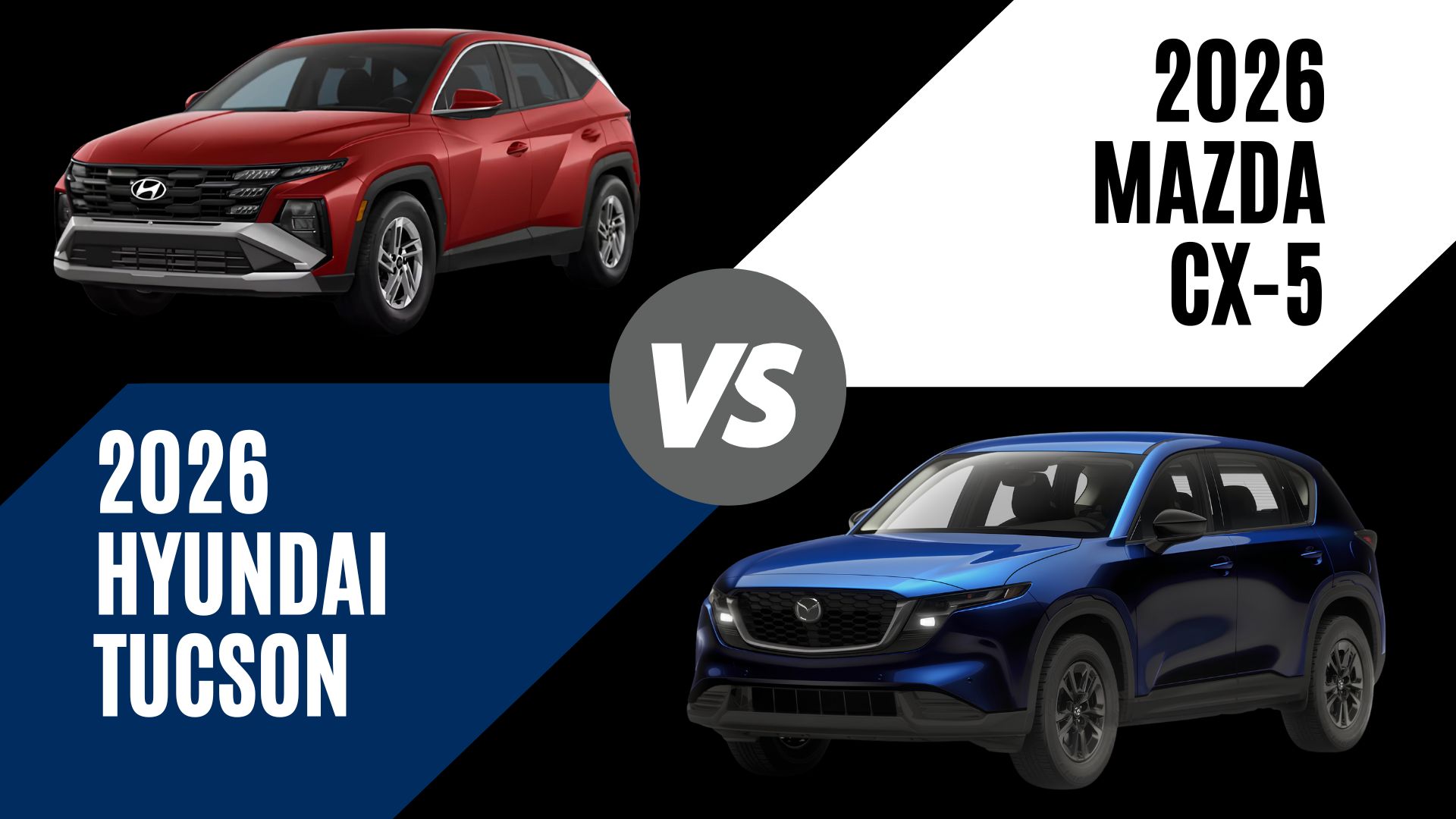
Compact SUV shoppers in Bentonville, AR, have no shortage of options, but the 2026 Hyundai Tucson and 2026 Mazda CX-5 consistently rise to the top of the list. Both bring a 187-hp four-cylinder engine, generous rear-seat room, and a genuine sense of style to a class that can feel repetitive trim after trim.
Once you dig into tech, ownership costs, and everyday livability, though, the gap between these two starts to widen. Full trim-by-trim specs are available on the 2026 Hyundai Tucson research page.
Vehicle Comparison
2026 Hyundai Tucson
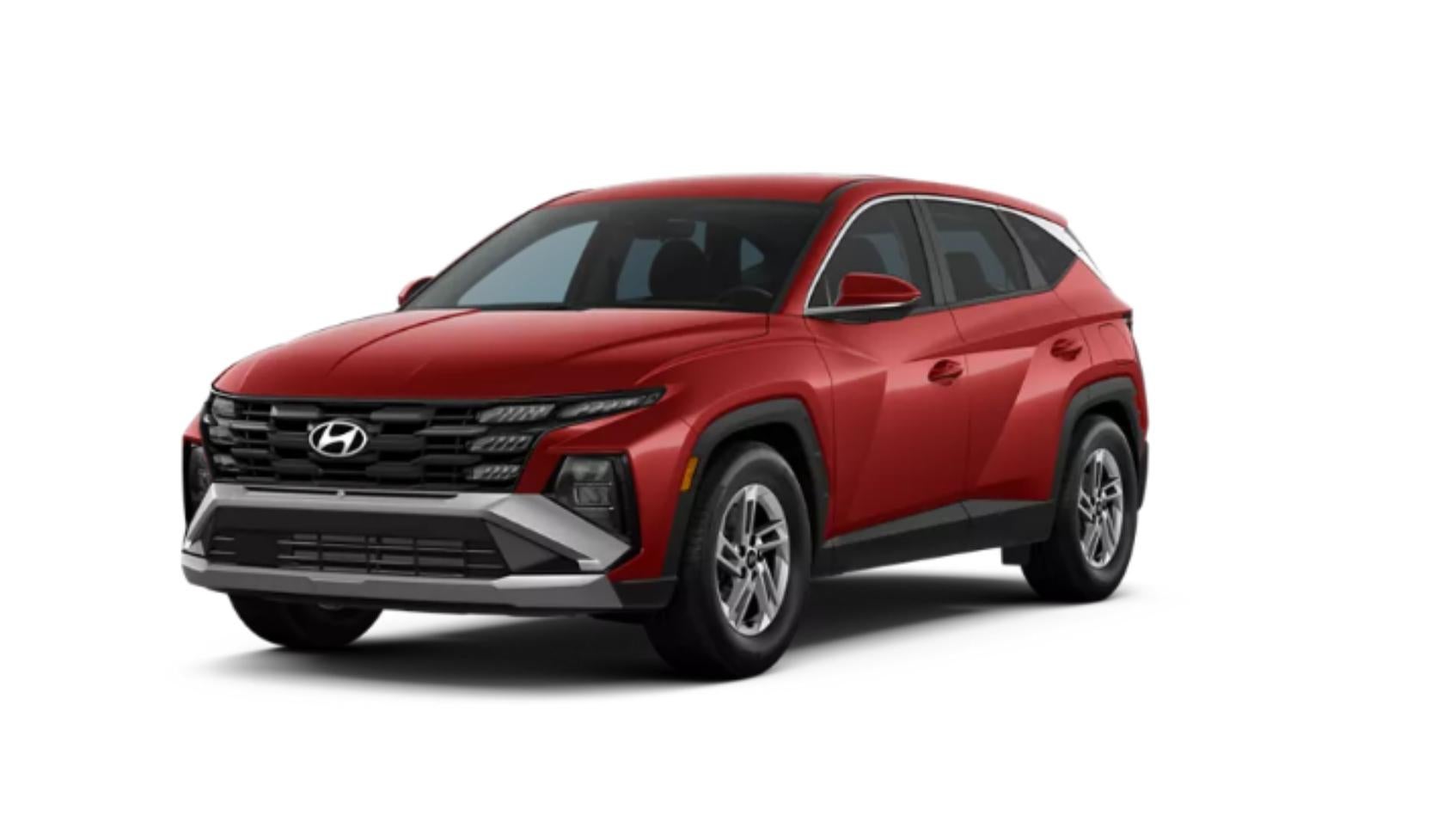
- 12.3″ Touchscreen w/ Wireless CarPlay & Android Auto
- AEB w/ Pedestrian Detection
- Hyundai Digital Key App
2026 Mazda CX-5
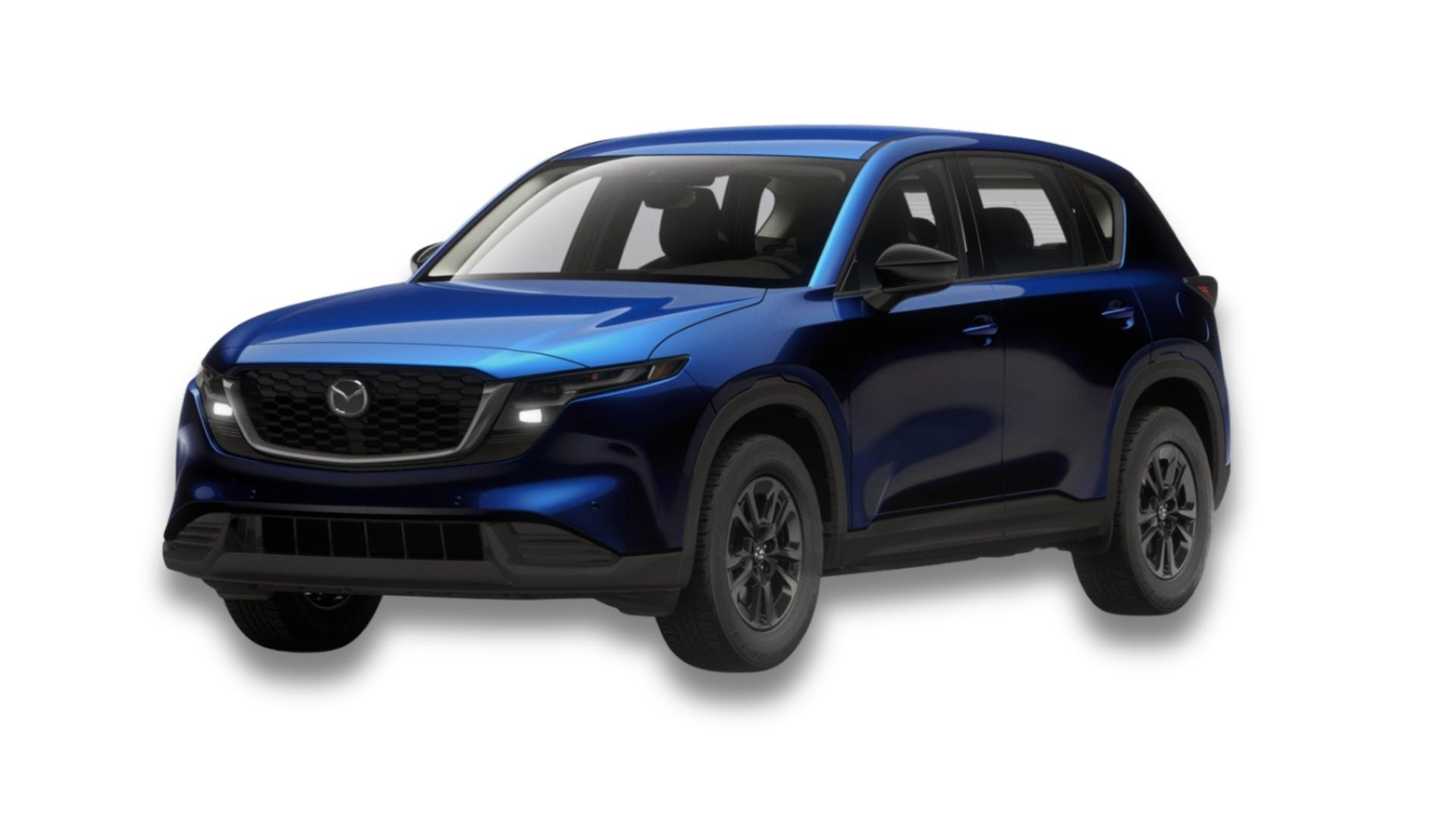
- 12.9″ Touchscreen w/ Google-Based Software
- Lane-Change Assist & Traffic-Sign Recognition
- All-Wheel Drive on Every Trim
Design and Styling
The Tucson wears a modern, angular look with a thoughtfully arranged cabin that Hyundai has carried over from its recently redesigned Palisade, Sonata, and Elantra. The redesigned CX-5 grows longer and wider for 2026, giving Mazda’s already upscale design language more room to breathe, along with seven available ambient lighting colors inside.
Styling Snapshot:
- Tucson: sharp, modern design with a cohesive cabin shared across Hyundai’s lineup
- CX-5: freshly redesigned exterior with expanded ambient lighting options
- Both: styling that reads more premium than the compact SUV norm
Ride, Handling, and Everyday Drivability
Both SUVs share an identical 187-hp 2.5-liter four-cylinder engine, but they send that power to the wheels differently. The Tucson pairs its engine with an eight-speed automatic and offers front-wheel drive as standard, with all-wheel drive available, while the CX-5 uses a six-speed automatic, and all-wheel drive is standard across every trim.
On the road, the Tucson prioritizes a hushed, refined cruise that testers described as feeling more luxurious than most rivals in this class. The CX-5 leans into sharper, more responsive handling, though neither vehicle is quick off the line: the CX-5 reaches 60 mph in 8.0 seconds, with an all-wheel-drive Tucson Limited following close behind at 8.8 seconds.
Behind the Wheel:
- Tucson: quieter, more refined ride with confident steering
- CX-5: sharper handling response, though acceleration is similarly modest
- Both: 187-hp four-cylinder engines with unremarkable off-the-line speed
Interior and Passenger Space
Hyundai fits the Tucson with a thoughtfully arranged cabin and quality materials, and its rear seat and cargo area measure larger than many rivals, holding nine carry-on suitcases behind the back row and 22 with the seats folded flat. The redesigned CX-5 also gained real interior room for 2026, with generous rear leg-, knee-, and headroom for adult passengers and a 34-cubic-foot cargo hold, though Mazda has not yet published suitcase-count testing for the new model.
Cargo and Comfort Breakdown:
- Tucson: verified real-world cargo capacity of nine suitcases behind the rear seats
- CX-5: larger 2026 redesign with more rear-seat room, though cargo testing is still pending
- Both: seating for five with genuinely spacious rear accommodations
Technology and Connectivity
The Tucson comes standard with a 12.3-inch touchscreen, with an optional combined dual-screen display that spans most of the dashboard for gauges and infotainment. Wireless Apple CarPlay and Android Auto come standard on every Tucson trim, and Hyundai’s Digital Key smartphone app lets a compatible phone lock, unlock, and remote-start the vehicle.
The CX-5 offers a standard 12.9-inch touchscreen with an available 15.6-inch upgrade running Google-based software, though wireless Apple CarPlay and Android Auto are limited to Select trim and above. Testers also noted usability issues with the new system, including occasional glitches and a frozen display, something Mazda may address with future software updates.
Tech Rundown:
- Tucson: wireless smartphone connectivity standard across every trim, plus Digital Key convenience
- CX-5: larger available screen, but wireless connectivity limited to higher trims
- Tucson holds a clear edge on consistent, hassle-free tech across the lineup
Safety and Driver-Assistance Features
Both SUVs come well-equipped with standard driver-assistance technology. The Tucson includes standard automated emergency braking with pedestrian detection and lane-departure warning with lane-keeping assist, with adaptive cruise control and lane-centering available on higher trims.
The CX-5 matches much of that with standard automated emergency braking, lane-keeping assist, and adaptive cruise control, adding lane-change assist and traffic-sign recognition as standard features. Bentonville drivers can see how this stacks up against Hyundai’s broader safety record in 2026’s eight IIHS honors.
Safety Stand-Outs:
- Tucson: standard pedestrian detection built into automated emergency braking
- CX-5: standard lane-change assist and traffic-sign recognition
- Both: standard automated emergency braking, lane-keeping assist, and adaptive cruise control
Power, AWD, and Fuel Economy
The Tucson’s 187-hp engine returns an EPA-estimated 25 mpg city and 33 mpg highway with front-wheel drive, or 24 mpg city and 30 mpg highway with all-wheel drive added. Towing tops out at 2,000 pounds with an optional hitch. The CX-5’s matching 187-hp engine, paired with standard all-wheel drive, is rated at 24 mpg city and 30 mpg highway, with towing capped at 1,500 pounds.
Fuel economy leans toward the Tucson, particularly in its front-wheel-drive form, and its higher towing capacity gives it a practical edge for anyone hauling a small trailer or watercraft.
A Note on Hybrid and Plug-In Options
This comparison focuses on the standard gas-powered Tucson and CX-5, so no hybrid or plug-in figures are mixed into the specs above. Hyundai already offers the Tucson in both Hybrid and Plug-In Hybrid form for drivers who want quicker acceleration with added efficiency, a lineup that has earned real industry recognition. Mazda has confirmed a CX-5 Hybrid is coming, but not until the 2027 model year, so it isn’t part of this comparison.
Ownership Value
Hyundai backs the Tucson with a five-year, 60,000-mile limited warranty and a ten-year, 100,000-mile powertrain warranty, plus three years or 36,000 miles of complimentary scheduled maintenance. Mazda’s coverage for the CX-5 is notably shorter, with a three-year, 36,000-mile limited warranty, a five-year, 60,000-mile powertrain warranty, and no complimentary maintenance. Bentonville drivers can see the full picture in Hyundai’s warranty coverage details.
Coverage Comparison:
- Tucson: 10-year/100,000-mile powertrain warranty, plus 3 years of complimentary maintenance
- CX-5: 5-year/60,000-mile powertrain warranty, no complimentary maintenance
- Tucson holds a clear, decisive advantage on long-term ownership costs
Why the Tucson Is the Smarter Choice in Bentonville
The 2026 Tucson and CX-5 both bring genuine strengths to the compact SUV class, but when it comes to everyday value, the Tucson pulls ahead. It offers stronger fuel economy, nearly double the towing capacity, wireless smartphone connectivity across every trim, and a warranty program that leaves the CX-5’s coverage well behind.
For Bentonville drivers who want a compact SUV backed by dependable long-term coverage and consistent tech, the Tucson is the clear recommendation. Stop by Crain Hyundai of Bentonville to see the 2026 Tucson in person and explore current inventory and financing options.
FAQs
Does the Tucson or CX-5 offer better fuel economy for Bentonville commuters?
The Tucson holds the edge, reaching up to 28 mpg combined in front-wheel-drive form compared to the CX-5’s 26 mpg combined with standard all-wheel drive.
Can the Tucson tow more than the CX-5?
Yes, the Tucson is rated to tow up to 2,000 pounds with an optional hitch, compared to the CX-5’s maximum of 1,500 pounds.
What warranty coverage comes with a new Tucson at Crain Hyundai of Bentonville?
The Tucson includes a five-year, 60,000-mile limited warranty, a ten-year, 100,000-mile powertrain warranty, and three years of complimentary scheduled maintenance.
Connect with us


Recent Blog Entries
- 2026 Hyundai Tucson vs 2026 Mazda CX-5: Which Compact SUV Wins in Bentonville?
- 2026 Hyundai Tucson vs. Volkswagen Tiguan | Bentonville, AR
- 2026 Hyundai Santa Cruz vs Ford Maverick in Bentonville, AR
- 2026 Hyundai Kona vs Honda HR-V in Bentonville, AR
- 2026 Hyundai Safety Awards: What Eight IIHS Honors Mean for Bentonville Drivers
Categories
Crain Hyundai of Bentonville
Address
3000 SE Moberly Ln
Bentonville, AR 72712
Phone
- Main 479-802-0943
- Main 479-802-0943
| Monday | 8:30AM - 8:00PM |
| Tuesday | 8:30AM - 8:00PM |
| Wednesday | 8:30AM - 8:00PM |
| Thursday | 8:30AM - 8:00PM |
| Friday | 8:30AM - 8:00PM |
| Saturday | 8:30AM - 8:00PM |
| Sunday | Closed |
| Monday | 7:00AM - 6:00PM |
| Tuesday | 7:00AM - 6:00PM |
| Wednesday | 7:00AM - 6:00PM |
| Thursday | 7:00AM - 6:00PM |
| Friday | 7:00AM - 6:00PM |
| Saturday | 7:00AM - 3:00PM |
| Sunday | Closed |
| Monday | 7:00AM - 6:00PM |
| Tuesday | 7:00AM - 6:00PM |
| Wednesday | 7:00AM - 6:00PM |
| Thursday | 7:00AM - 6:00PM |
| Friday | 7:00AM - 6:00PM |
| Saturday | 7:00AM - 3:00PM |
| Sunday | Closed |
