
• Crain Hyundai of Bentonville

Blog / Crain Hyundai of Bentonville

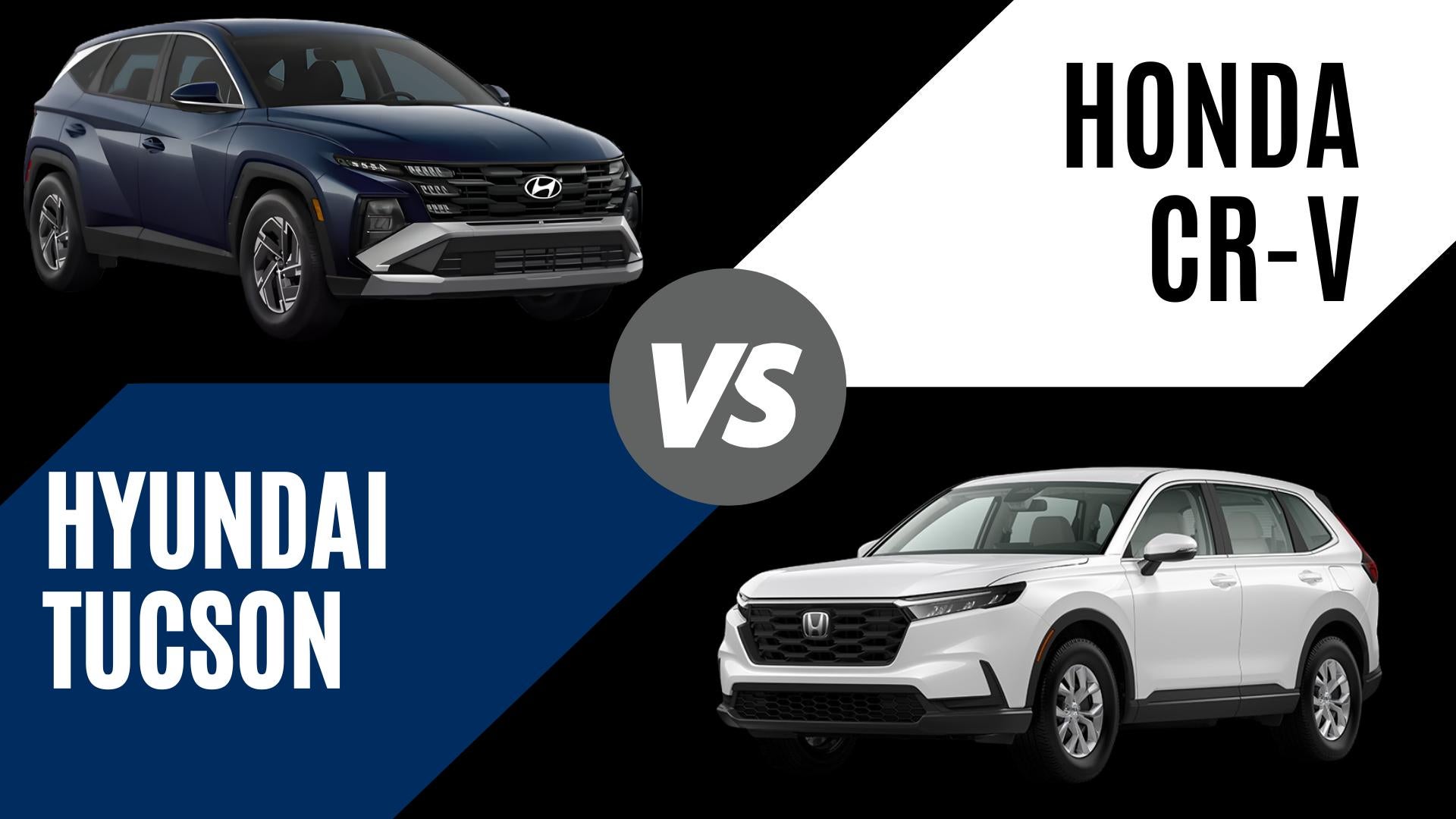
2026 Hyundai Tucson vs Honda CR-V in Bentonville, AR

2026 Hyundai Tucson vs 2026 Honda CR-V comparison in Bentonville AR

Drivers in Bentonville and across Northwest Arkansas often compare two of the most popular compact SUVs on the road: the 2026 Hyundai Tucson and the 2026 Honda CR-V. Both are known for everyday comfort, modern safety features, and easy drivability. While each model offers multiple powertrain options, many shoppers still focus on the traditional gas models for their balance of performance, efficiency, and value.

At Crain Hyundai of Bentonville, we compared the gas-powered 2026 Tucson and CR-V side by side to help local drivers decide which SUV fits their daily driving needs best.

TL;DR: Quick Take for Bentonville Drivers

Both SUVs are strong contenders in the compact segment. The 2026 Honda CR-V offers familiar design and solid safety technology. The 2026 Hyundai Tucson, however, stands out with more standard technology, broader all-wheel-drive availability, added capability, and long-term ownership value. For many Bentonville drivers, the Tucson delivers more where it matters most.

Vehicle Comparison

2026 Hyundai Tucson
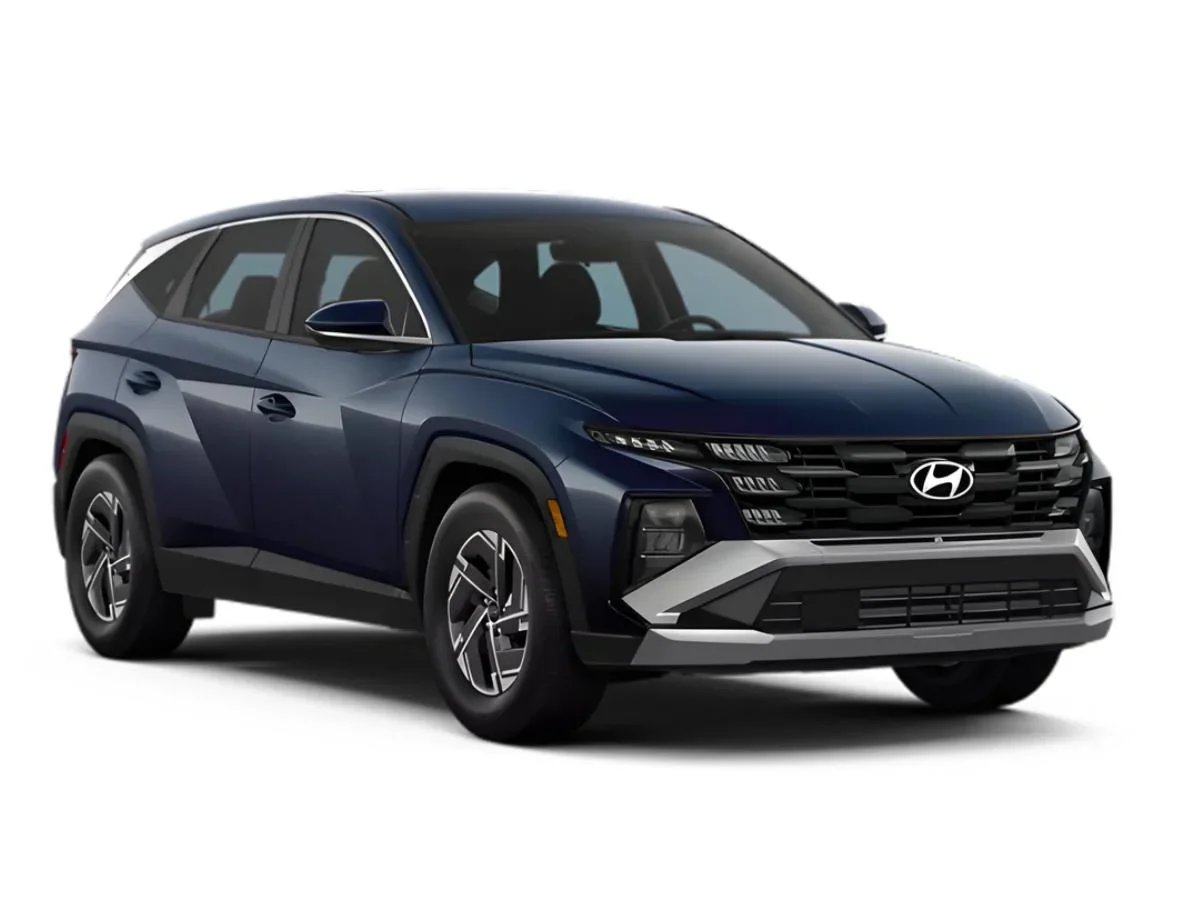
2026 Hyundai Tucson Deep Sea exterior front view
Horsepower
187
AWD Availability
Available
Fuel Economy / Range
28 combined mpg (city/hwy)
Seating Capacity
5
Top Features
  • Hyundai Smartsense
  • Standard 12.3-inch touchscreen
  • HTRAC AWD + up to 2,750-lb towing

2026 Honda CR-V
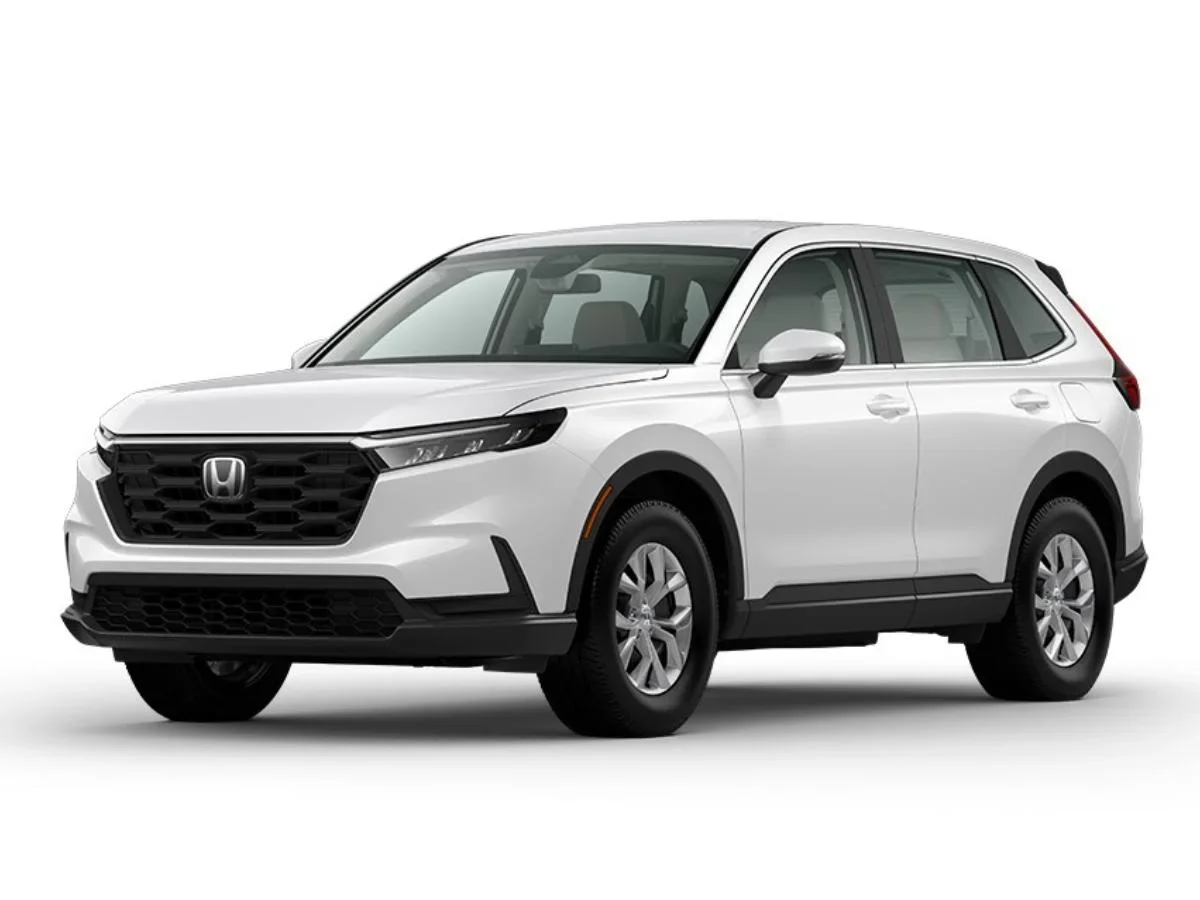
2026 Honda CR-V Platinum White Pearl exterior front view
Horsepower
190
AWD Availability
Available
Fuel Economy / Range
30 combined mpg (city/hwy)
Seating Capacity
5
Top Features
  • Honda Sensing
  • Touchscreen infotainment system
  • Real Time AWD

Design: Modern Presence vs Clean Simplicity

The 2026 Hyundai Tucson continues the bold, modern design introduced with its recent refresh. Sharp lines, a distinctive grille, and sleek lighting give it a confident look that feels right at home on Bentonville roads, whether you’re heading through downtown or parking near Walton Boulevard.

The 2026 Honda CR-V features a clean, straightforward design that prioritizes simplicity and practicality.

Edge: Hyundai Tucson for its modern styling and standout road presence.

Interior Comfort and Space

Inside, the 2026 Tucson offers a quiet, spacious cabin with generous rear-seat legroom and an open, refined layout. Premium materials and thoughtful design details give it an upscale feel that works well for both families and commuters.

The 2026 CR-V provides a comfortable interior with good visibility and functional seating, making it easy to drive and live with day-to-day.

Edge: Hyundai Tucson for its roomy feel and refined cabin design.

Performance and Fuel Economy (Gas Models)

The gas-powered 2026 Hyundai Tucson features a 2.5L 4-cylinder engine producing 187 horsepower, paired with an 8-speed automatic transmission. Front-wheel-drive models earn up to 28 combined mpg, while available HTRAC all-wheel drive delivers up to 26 combined mpg.

The gas-powered 2026 Honda CR-V uses a turbocharged engine producing 190 horsepower and achieves up to 30 combined mpg. All-wheel drive is also available.

Both SUVs offer smooth acceleration and comfortable driving manners for everyday use.

Result: Close comparison, with both delivering strong performance and efficiency for compact SUV shoppers.

All-Wheel Drive and Capability

The 2026 Hyundai Tucson offers HTRAC all-wheel drive on every trim, giving Bentonville drivers flexibility when choosing their preferred setup. When properly equipped, the Tucson can tow up to 2,750 pounds, adding versatility for small trailers or outdoor gear.

The 2026 Honda CR-V offers Real Time AWD, providing added traction when road conditions change.

Edge: Hyundai Tucson for wider AWD availability and added towing capability.

Technology and Connectivity

Technology is a major strength for the Tucson. The 2026 Hyundai Tucson comes standard with a 12.3-inch touchscreen, wireless Apple CarPlay and Android Auto, available digital instrument cluster, and Bluelink+ connected services. Higher trims add features like a head-up display and Digital Key compatibility.

The 2026 Honda CR-V includes a touchscreen infotainment system with smartphone integration and driver-assist displays, offering a clean and user-friendly experience.

Edge: Hyundai Tucson for its larger standard screen and advanced available tech.

Safety Features

Safety is a priority for both vehicles. Every 2026 Tucson includes Hyundai SmartSense, featuring Forward Collision-Avoidance Assist, Lane Keeping Assist, Blind-Spot Monitoring, and Driver Attention Warning.

The 2026 CR-V includes Honda Sensing, with forward-collision warning, automatic emergency braking, lane-keeping assist, and adaptive cruise control. The CR-V also earns strong safety ratings.

Result: Both SUVs perform well in safety, with comprehensive driver-assist systems included.

Ownership Value and Warranty

This is where the Tucson clearly stands apart. The 2026 Hyundai Tucson is backed by Hyundai’s 10-year/100,000-mile powertrain warranty, along with 3 years or 36,000 miles of complimentary maintenance.

The 2026 Honda CR-V includes a 5-year/60,000-mile powertrain warranty and 1 year or 12,000 miles of complimentary maintenance.

For Bentonville drivers planning long-term ownership, the Tucson delivers greater confidence and value.

Edge: Hyundai Tucson for warranty coverage and ownership benefits.

Our Choice: Why We Recommend the 2026 Hyundai Tucson

The Honda CR-V remains a well-known and capable compact SUV. However, when comparing gas-powered models side by side, the 2026 Hyundai Tucson offers more of what Bentonville drivers value most.

We recommend the Tucson because it delivers:

  • More standard technology for the price
  • Available AWD across the lineup
  • Added capability with towing capacity
  • A refined, spacious interior
  • Industry-leading warranty coverage

At Crain Hyundai of Bentonville, we see why so many local drivers continue to choose the Tucson for everyday driving and long-term peace of mind.

In addition to the gas models compared here, the Hyundai Tucson lineup also includes hybrid options for Bentonville drivers who want even more efficiency.

FAQs: 2026 Tucson vs CR-V

Is the 2026 Hyundai Tucson available near me?
Yes. The 2026 Hyundai Tucson is available at Crain Hyundai of Bentonville, serving drivers across Northwest Arkansas.

Does the Tucson offer all-wheel drive?
Yes. HTRAC all-wheel drive is available on every gas-powered Tucson trim.

Which SUV offers better warranty coverage?
The Hyundai Tucson offers significantly longer powertrain coverage and more complimentary maintenance than the Honda CR-V.

Visit Crain Hyundai of Bentonville

If you’re comparing the 2026 Hyundai Tucson to the Honda CR-V in Bentonville, AR, the best next step is to see the Tucson in person. Visit Crain Hyundai of Bentonville to explore available trims, take a test drive, and experience why the Tucson continues to be a top choice for local drivers.
Check out how the Tucson compares to the Toyota RAV-4.

Posted in:

Related Posts

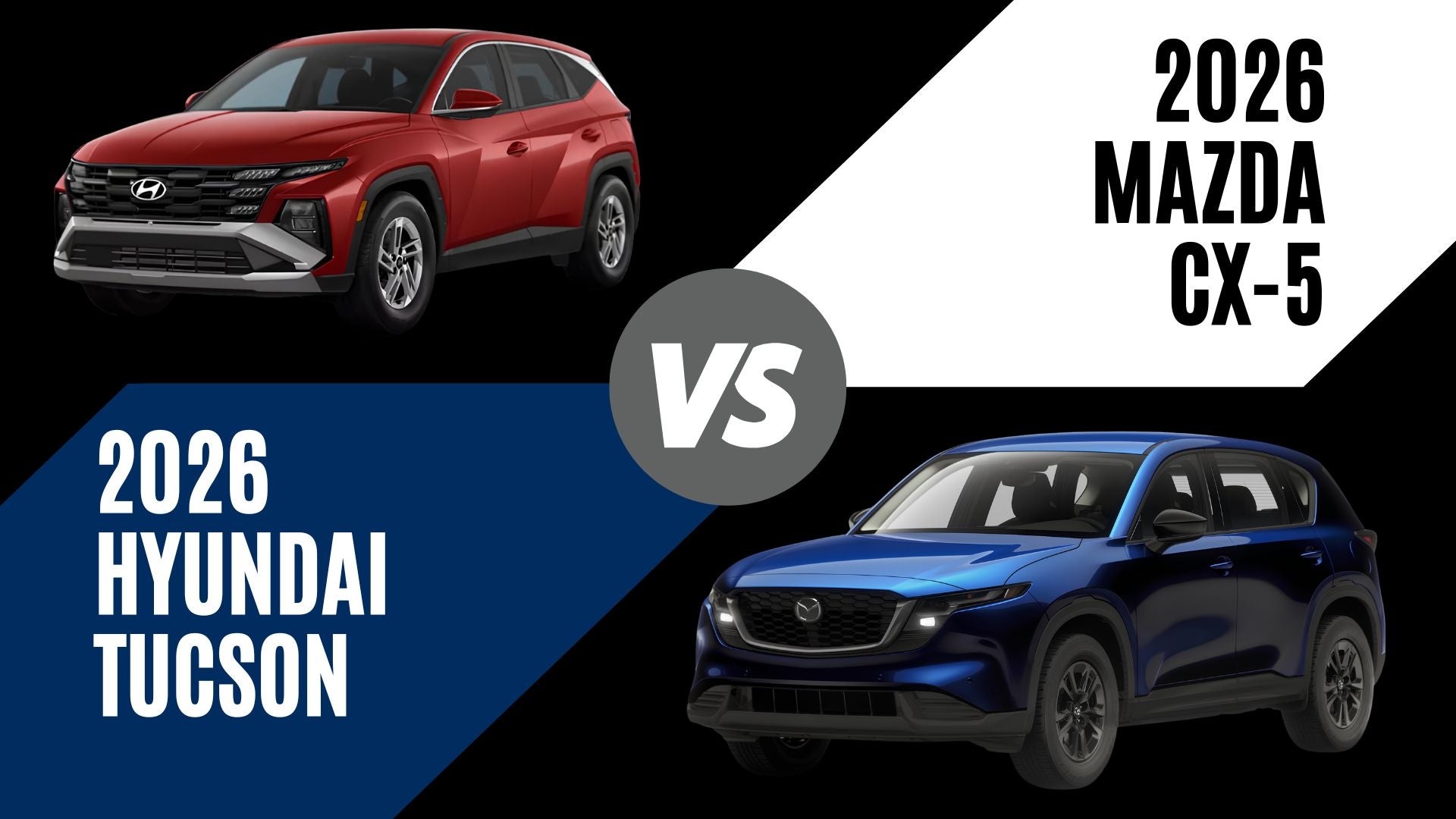
2026 Hyundai Tucson and 2026 Mazda CX-5 compact SUVs compared side by side for Bentonville, Arkansas drivers

2026 Hyundai Tucson vs 2026 Mazda CX-5: Which Compact SUV Wins in Bentonville?

Compact SUV shoppers in Bentonville, AR, have no shortage of options, but the 2026 Hyundai Tucson and 2026 Mazda CX-5 consistently rise to the top of the list. Both bring a 187-hp four-cylinder engine, generous rear-seat room, and a genuine sense of style to a class that can feel repetitive trim after trim. Once you dig into tech, ownership costs, and everyday livability, though, the gap between these two starts to widen. Full trim-by-trim specs are available on the 2026 Hyundai Tucson research page. Vehicle Comparison 2026 Hyundai Tucson Horsepower 187 hp (2.5L I4) AWD Availability Available Fuel Economy / Range 25/33 (FWD); 24/30 (AWD) mpg (city/hwy) Seating Capacity 5 Top Features 12.3" Touchscreen w/ Wireless CarPlay & Android Auto AEB w/ Pedestrian Detection Hyundai Digital Key App Towing Capacity Up to 2,000 lbs (optional hitch required) Find Your Tucson Today 2026 Mazda CX-5 Horsepower 187 hp (2.5L I4) AWD Availability Standard Fuel Economy / Range 25/33 (FWD); 24/30 (AWD) mpg (city/hwy) Seating Capacity 5 Top Features 12.9" Touchscreen w/ Google-Based Software Lane-Change Assist & Traffic-Sign Recognition All-Wheel Drive on Every Trim Towing Capacity Up to 1,500 lbs Search Our Used Inventory Design and Styling The Tucson wears a modern, angular look with a thoughtfully arranged cabin that Hyundai has carried over from its recently redesigned Palisade, Sonata, and Elantra. The redesigned CX-5 grows longer and wider for 2026, giving Mazda's already upscale design language more room to breathe, along with seven available ambient lighting colors inside. Styling Snapshot: Tucson: sharp, modern design with a cohesive cabin shared across Hyundai's lineup CX-5: freshly redesigned exterior with expanded ambient lighting options Both: styling that reads more premium than the compact SUV norm Ride, Handling, and Everyday Drivability Both SUVs share an identical 187-hp 2.5-liter four-cylinder engine, but they send that power to the wheels differently. The Tucson pairs its engine with an eight-speed automatic and offers front-wheel drive as standard, with all-wheel drive available, while the CX-5 uses a six-speed automatic, and all-wheel drive is standard across every trim. On the road, the Tucson prioritizes a hushed, refined cruise that testers described as feeling more luxurious than most rivals in this class. The CX-5 leans into sharper, more responsive handling, though neither vehicle is quick off the line: the CX-5 reaches 60 mph in 8.0 seconds, with an all-wheel-drive Tucson Limited following close behind at 8.8 seconds. Behind the Wheel: Tucson: quieter, more refined ride with confident steering CX-5: sharper handling response, though acceleration is similarly modest Both: 187-hp four-cylinder engines with unremarkable off-the-line speed Interior and Passenger Space Hyundai fits the Tucson with a thoughtfully arranged cabin and quality materials, and its rear seat and cargo area measure larger than many rivals, holding nine carry-on suitcases behind the back row and 22 with the seats folded flat. The redesigned CX-5 also gained real interior room for 2026, with generous rear leg-, knee-, and headroom for adult passengers and a 34-cubic-foot cargo hold, though Mazda has not yet published suitcase-count testing for the new model. Cargo and Comfort Breakdown: Tucson: verified real-world cargo capacity of nine suitcases behind the rear seats CX-5: larger 2026 redesign with more rear-seat room, though cargo testing is still pending Both: seating for five with genuinely spacious rear accommodations Technology and Connectivity The Tucson comes standard with a 12.3-inch touchscreen, with an optional combined dual-screen display that spans most of the dashboard for gauges and infotainment. Wireless Apple CarPlay and Android Auto come standard on every Tucson trim, and Hyundai's Digital Key smartphone app lets a compatible phone lock, unlock, and remote-start the vehicle. The CX-5 offers a standard 12.9-inch touchscreen with an available 15.6-inch upgrade running Google-based software, though wireless Apple CarPlay and Android Auto are limited to Select trim and above. Testers also noted usability issues with the new system, including occasional glitches and a frozen display, something Mazda may address with future software updates. Tech Rundown: Tucson: wireless smartphone connectivity standard across every trim, plus Digital Key convenience CX-5: larger available screen, but wireless connectivity limited to higher trims Tucson holds a clear edge on consistent, hassle-free tech across the lineup Safety and Driver-Assistance Features Both SUVs come well-equipped with standard driver-assistance technology. The Tucson includes standard automated emergency braking with pedestrian detection and lane-departure warning with lane-keeping assist, with adaptive cruise control and lane-centering available on higher trims. The CX-5 matches much of that with standard automated emergency braking, lane-keeping assist, and adaptive cruise control, adding lane-change assist and traffic-sign recognition as standard features. Bentonville drivers can see how this stacks up against Hyundai's broader safety record in 2026's eight IIHS honors. Safety Stand-Outs: Tucson: standard pedestrian detection built into automated emergency braking CX-5: standard lane-change assist and traffic-sign recognition Both: standard automated emergency braking, lane-keeping assist, and adaptive cruise control Power, AWD, and Fuel Economy The Tucson's 187-hp engine returns an EPA-estimated 25 mpg city and 33 mpg highway with front-wheel drive, or 24 mpg city and 30 mpg highway with all-wheel drive added. Towing tops out at 2,000 pounds with an optional hitch. The CX-5's matching 187-hp engine, paired with standard all-wheel drive, is rated at 24 mpg city and 30 mpg highway, with towing capped at 1,500 pounds. Fuel economy leans toward the Tucson, particularly in its front-wheel-drive form, and its higher towing capacity gives it a practical edge for anyone hauling a small trailer or watercraft. A Note on Hybrid and Plug-In Options This comparison focuses on the standard gas-powered Tucson and CX-5, so no hybrid or plug-in figures are mixed into the specs above. Hyundai already offers the Tucson in both Hybrid and Plug-In Hybrid form for drivers who want quicker acceleration with added efficiency, a lineup that has earned real industry recognition. Mazda has confirmed a CX-5 Hybrid is coming, but not until the 2027 model year, so it isn't part of this comparison. Ownership Value Hyundai backs the Tucson with a five-year, 60,000-mile limited warranty and a ten-year, 100,000-mile powertrain warranty, plus three years or 36,000 miles of complimentary scheduled maintenance. Mazda's coverage for the CX-5 is notably shorter, with a three-year, 36,000-mile limited warranty, a five-year, 60,000-mile powertrain warranty, and no complimentary maintenance. Bentonville drivers can see the full picture in Hyundai's warranty coverage details. Coverage Comparison: Tucson: 10-year/100,000-mile powertrain warranty, plus 3 years of complimentary maintenance CX-5: 5-year/60,000-mile powertrain warranty, no complimentary maintenance Tucson holds a clear, decisive advantage on long-term ownership costs Why the Tucson Is the Smarter Choice in Bentonville The 2026 Tucson and CX-5 both bring genuine strengths to the compact SUV class, but when it comes to everyday value, the Tucson pulls ahead. It offers stronger fuel economy, nearly double the towing capacity, wireless smartphone connectivity across every trim, and a warranty program that leaves the CX-5's coverage well behind. For Bentonville drivers who want a compact SUV backed by dependable long-term coverage and consistent tech, the Tucson is the clear recommendation. Stop by Crain Hyundai of Bentonville to see the 2026 Tucson in person and explore current inventory and financing options. FAQs Does the Tucson or CX-5 offer better fuel economy for Bentonville commuters? The Tucson holds the edge, reaching up to 28 mpg combined in front-wheel-drive form compared to the CX-5's 26 mpg combined with standard all-wheel drive. Can the Tucson tow more than the CX-5? Yes, the Tucson is rated to tow up to 2,000 pounds with an optional hitch, compared to the CX-5's maximum of 1,500 pounds. What warranty coverage comes with a new Tucson at Crain Hyundai of Bentonville? The Tucson includes a five-year, 60,000-mile limited warranty, a ten-year, 100,000-mile powertrain warranty, and three years of complimentary scheduled maintenance.

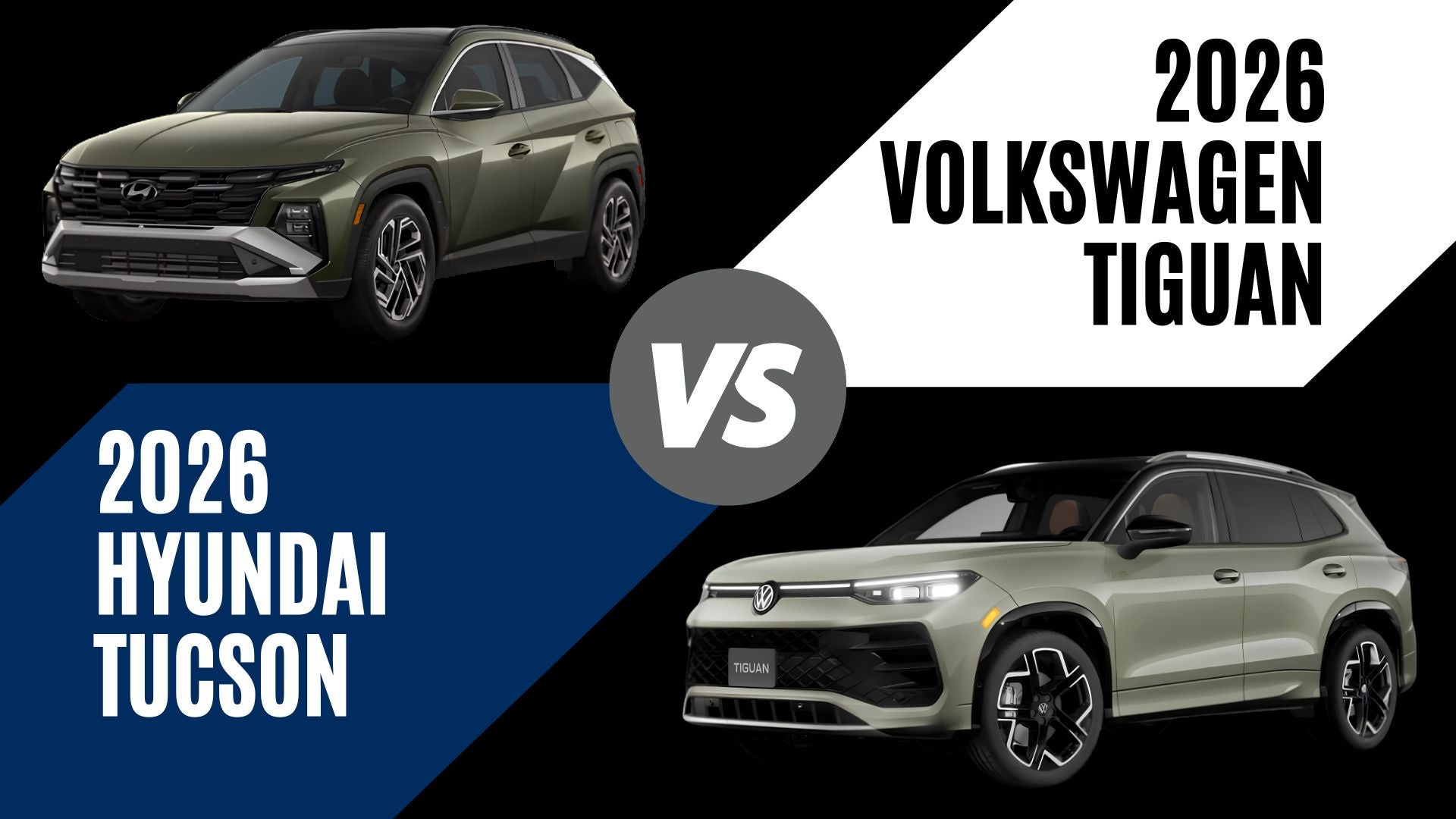
Side-by-side comparison of the 2026 Hyundai Tucson and 2026 Volkswagen Tiguan family SUVs in a neutral studio setting.

2026 Hyundai Tucson vs. Volkswagen Tiguan | Bentonville, AR

Two Strong Family SUVs, One Clear Bentonville Advantage in Ownership Family SUV buyers in Bentonville, AR, have plenty to weigh beyond seating and cargo room. Cabin quality, everyday tech, and long-term ownership costs all factor into the decision. The 2026 Hyundai Tucson and 2026 Volkswagen Tiguan both offer spacious interiors, driver-assistance technology, and available all-wheel drive in the compact SUV class, making them a natural side-by-side comparison at Crain Hyundai of Bentonville. This comparison focuses on the gas-powered Tucson lineup. The Tucson is also available in hybrid and plug-in hybrid versions, but those powertrains aren't included in the specs below. Full trim details for the gas Tucson are available on the 2026 Hyundai Tucson model research page. Vehicle Comparison 2026 Hyundai Tucson Horsepower 187 hp AWD Availability Available Fuel Economy / Range 26-28 combined mpg (city/hwy) Seating Capacity 5 Top Features 12.3-inch Touchscreen Hyundai Digital Key 2 Hyundai SmartSense Safety Suite Towing Capacity Up to 2,000 lbs (with optional trailer hitch) Find Your Tucson Today 2026 Volkswagen Tiguan Horsepower 201–268 hp AWD Availability Available Fuel Economy / Range 22-34 (range varies by trim) mpg (city/hwy) Seating Capacity 5 Top Features 12.9-inch Touchscreen Standard Adaptive Cruise Control IQ.DRIVE Safety Suite Towing Capacity Up to 1,800 lbs Search Our Used Inventory Cabin Design: Everyday Simplicity vs. European Flair The Tucson's interior leans into clarity. A digital gauge display, column-mounted shifter, and a dedicated climate panel with physical buttons keep everyday controls easy to find without digging through menus. The materials and layout reflect the design language running through Hyundai's current lineup. The Tiguan takes a different approach, borrowing European styling cues and its own column-mounted shifter to free up console space for extra storage. Higher trims add leather upholstery and genuine wood trim, giving the cabin a more upscale personality in a class where interiors can start to blend together. At a Glance: Tucson: Simple, modern dashboard with physical climate controls Tiguan: European-inspired design, available leather and wood trim on higher trims Both: Column-mounted shifters that free up console storage Technology: Two Big Screens, Two Different Philosophies Screens and software increasingly shape how a compact SUV feels day-to-day, and both deliver real depth. Every Tucson trim comes standard with a 12.3-inch touchscreen, and SEL Premium and Limited trims add a combined 12.3-inch digital gauge cluster with navigation. Hyundai Digital Key 2 rounds things out on higher trims, letting a compatible smartphone unlock, start, and even share access to the vehicle. The Tiguan starts with a standard 12.9-inch touchscreen, stepping up to an available 15-inch display running Volkswagen's Digital Cockpit Pro software on higher trims. A rotary volume knob and physical drive-mode controls stick around even as the screens grow, a detail that drivers who prefer tactile controls will likely appreciate. Tech Snapshot: Tucson: Standard 12.3-inch touchscreen, available digital gauge cluster with navigation, Digital Key convenience Tiguan: Standard 12.9-inch touchscreen, available 15-inch display, retained physical rotary controls Both: Wireless smartphone connectivity across the lineup Ride and Performance: Refined Cruiser vs. Turbocharged Punch The Tucson and Tiguan reach for different things on the road. Every gas Tucson trim uses a 187-hp 2.5-liter four-cylinder paired with an eight-speed automatic and available all-wheel drive. Acceleration is adequate rather than quick. It’s about 8.8 seconds to 60 mph in testing. The tradeoff is a notably quiet, settled ride at cruising speed. The Tiguan splits its lineup by trim. The S, SE, and SE R-Line Black trims use a 201-hp turbocharged 2.0-liter four-cylinder, while the new-for-2026 SEL R-Line Turbo steps up to a 268-hp version of that same engine with standard all-wheel drive, reaching 60 mph in a considerably quicker 6.7 seconds. Behind the Wheel: Tucson: 187-hp 2.5L four-cylinder across all gas trims, 8.8-second 0-60 Tiguan: 201-hp base turbo, 268-hp SEL R-Line Turbo, 6.7-second 0-60 (top trim) Both: Available all-wheel drive Interior Space: Room to Live With Cargo and passenger room matter every day for families in Bentonville, Rogers, and Springdale, and both SUVs deliver generously for their class. The Tucson fits 9 carry-on suitcases behind the rear seats and 22 with the seatbacks folded down, with a rear seat and cargo area that run larger than many rivals. The redesigned Tiguan gained real length, fitting 9 carry-on suitcases behind the rear seats and 25 with them folded. The previous generation's optional third row is no longer available. Cargo Breakdown: Tucson: 9 suitcases behind rear seats, 22 with seats folded Tiguan: 9 suitcases behind rear seats, 25 with seats folded Both: Seating for five, no third-row option Safety: Standard Protection, Different Emphasis Driver-assistance features are expected in this class now, and both SUVs deliver real depth here. Every Tucson comes standard with automated emergency braking with pedestrian detection and lane-keeping assist, while Hyundai SmartSense adds adaptive cruise control and lane-centering on higher trims. Highway Driving Assist 2 adds another layer of ease on longer highway stretches. Every Tiguan trim comes standard with adaptive cruise control and lane-centering, along with automated emergency braking and lane-keeping assist. A total of 10 airbags, including driver knee, center, and rear-side airbags, backs up the active safety suite. Safety Highlights: Tucson: Hyundai SmartSense and Highway Driving Assist 2 on select trims Tiguan: Standard adaptive cruise control across the lineup, 10 total airbags Both: Standard automated emergency braking and lane-keeping assist Performance, AWD, and Fuel Economy for Bentonville Drivers Efficiency still matters for daily commutes throughout Bentonville, Rogers, Springdale, and Fayetteville. The Tucson's 187-hp engine is available with front-wheel drive or all-wheel drive. Front-wheel-drive models are rated at 25 mpg in the city and 33 mpg on the highway, for a combined 28 mpg, while all-wheel-drive models come in at 24 mpg in the city and 30 mpg on the highway, for a combined 26 mpg. The Tiguan's 201-hp base engine is also available with front-wheel drive or 4Motion all-wheel drive, reaching up to 26 mpg in the city and 34 mpg on the highway in front-wheel-drive trims, and dropping to 22 mpg in the city and 30 mpg on the highway with all-wheel drive. The more powerful 268-hp SEL R-Line Turbo, which comes standard with all-wheel drive, is rated slightly lower on the highway at 29 mpg. Efficiency at a Glance: Tucson: 28 combined mpg (FWD), 26 combined mpg (AWD) Tiguan: Up to 26 city/34 highway mpg (FWD, base engine), 29 highway (SEL R-Line Turbo, AWD standard) Both: Available all-wheel drive with competitive efficiency for their output More Power, Less Gas: The Tucson Hybrid and Plug-In Hybrid While this comparison focuses on the gas Tucson, it's not the only option in the lineup. Drivers who want quicker acceleration without stepping up to the Tiguan's turbocharged engine can look at the Tucson Hybrid or Tucson Plug-In Hybrid, both of which move quicker than the standard gas engine while adding electrified efficiency. Ownership Value: Where Hyundai Pulls Ahead Warranty coverage separates these two brands more than any single feature does. Hyundai's 10-year/100,000-mile warranty backs the Tucson with a 5-year/60,000-mile limited warranty plan, plus 3 years or 36,000 miles of complimentary scheduled maintenance. Volkswagen covers the Tiguan with a 4-year/50,000-mile limited and powertrain warranty, along with 2 years or 20,000 miles of complimentary maintenance. This is solid coverage, but a clear step behind Hyundai's package. Coverage Comparison: Tucson: 10-year/100,000-mile powertrain warranty, 3 years of complimentary maintenance Tiguan: 4-year/50,000-mile powertrain warranty, 2 years of complimentary maintenance Tucson holds a clear advantage on long-term coverage Which Family SUV Fits Your Bentonville Lifestyle? Both the Tucson and Tiguan bring genuine strengths to this class, and the right choice comes down to what matters most day-to-day. Drivers who want a quiet, settled ride paired with exceptional warranty coverage may find the Tucson lines up well with their priorities. Others chasing stronger performance, particularly with the Tiguan's available 268-hp engine, or European design character, may lean toward the Tiguan instead. The team at Crain Hyundai of Bentonville can walk you through either option in person. Buyers weighing other options can also see how the Tucson stacks up against the Honda CR-V or the Nissan Rogue. Either way, drivers throughout Bentonville, Rogers, Springdale, and Fayetteville get a genuinely well-equipped family SUV built for daily life in Northwest Arkansas. FAQs Q: What's the biggest difference in everyday tech between these two SUVs? A: The Tiguan offers a larger available touchscreen (up to 15 inches) with retained physical rotary controls, while the Tucson pairs its 12.3-inch touchscreen with Hyundai Digital Key convenience for keyless entry and start on higher trims. Q: How does interior design differ between the Tucson and Tiguan? A: The Tucson favors a simple, modern layout with physical climate controls, while the Tiguan brings European styling cues and available leather and wood trim on higher trims for a more upscale feel. Q: Do both SUVs offer all-wheel drive? A: Yes, both the Tucson and Tiguan offer all-wheel drive across their lineups, giving Bentonville-area drivers added confidence in changing weather conditions.

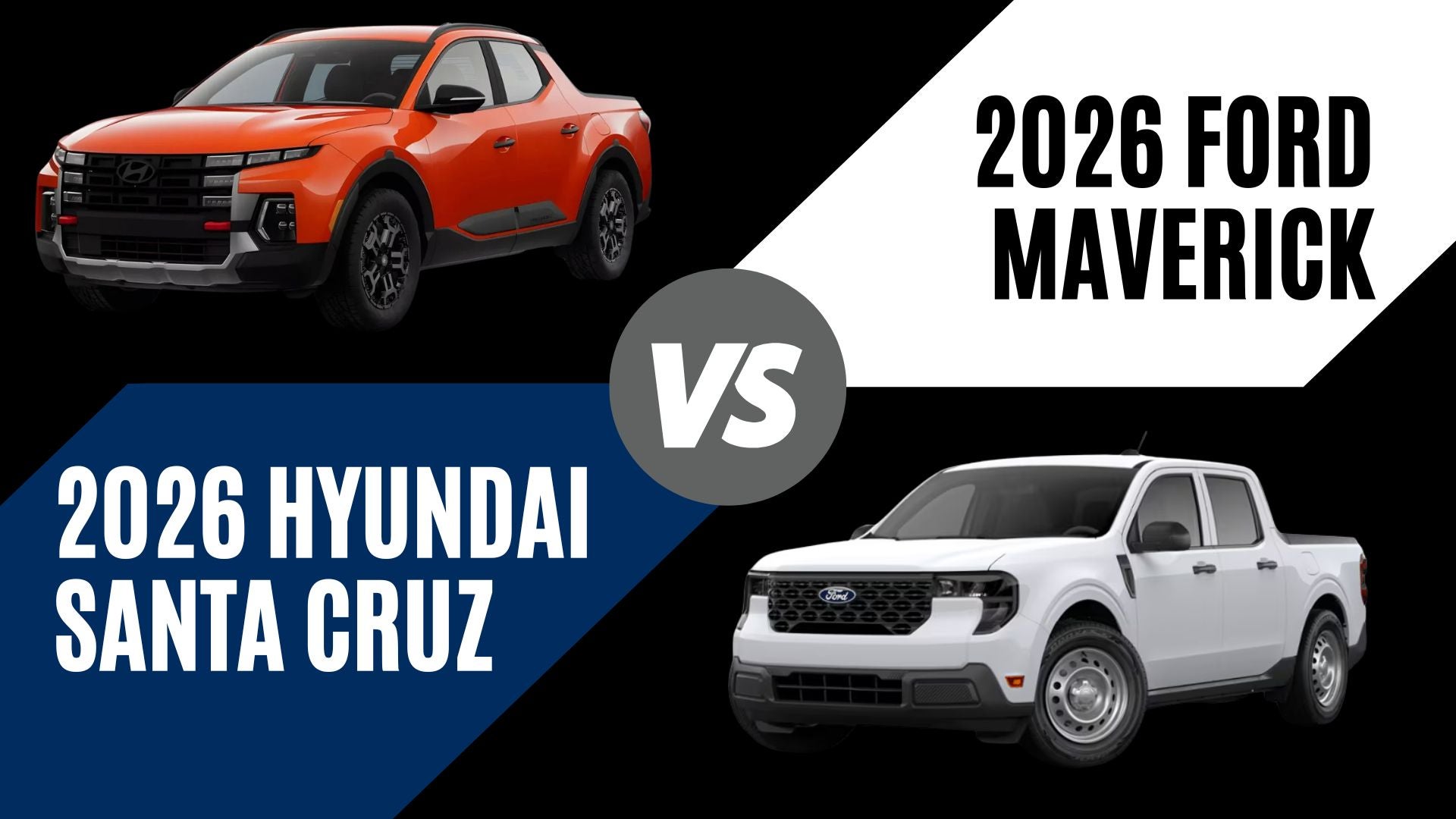
2026 Hyundai Santa Cruz and Ford Maverick comparison graphic for Bentonville, Arkansas compact truck shoppers

2026 Hyundai Santa Cruz vs Ford Maverick in Bentonville, AR

Which Compact Truck Handles Daily Life and Weekend Adventures Best? A full-size pickup isn't always the right fit. Plenty of drivers in Bentonville, AR, want an open bed, real towing capability, and available all-wheel drive without the size or fuel costs that come with a traditional truck. That's exactly the gap the 2026 Hyundai Santa Cruz and 2026 Ford Maverick were built to fill. Both compact trucks bring genuine capability to the table, but the Santa Cruz leans further into SUV-level comfort and technology, making it just as comfortable on a Monday commute through Bentonville as it is loaded up for a weekend trip to the trails. More trim details and available configurations are covered on the 2026 Hyundai Santa Cruz model research page. Vehicle Comparison 2026 Hyundai Santa Cruz Horsepower 191–281 hp AWD Availability Available Fuel Economy / Range 20-25 combined mpg (city/hwy) Seating Capacity 5 Top Features Available 281-hp Turbo Engine Hyundai Digital Key 2 In-Bed Storage + Integrated Tonneau Cover Towing Capacity Up to 5,000 lbs Bed Length 4 ft Find Your Santa Cruz Today 2026 Ford Maverick Horsepower 191–250 hp AWD Availability Available Fuel Economy / Range 22-30 combined mpg (city/hwy) Seating Capacity 5 Top Features Available Hybrid Powertrain 13.2" Touchscreen FLEXBED Storage System Towing Capacity Up to 4,000 lbs Bed Length 4.5 ft Search Our Used Inventory Standout Style for a Compact Truck SUV-inspired proportions set the Santa Cruz apart from a traditional pickup silhouette right away. Hyundai's approach blends genuine truck functionality with a shape that feels equally at home parked downtown or heading out toward Northwest Arkansas' outdoor destinations. A more conventional truck look defines the Maverick instead, with upright lines and squared-off styling that communicate utility above all else. First Look: Santa Cruz: Sport-inspired styling with SUV-like proportions Maverick: Traditional compact truck design Both: Genuinely functional despite their different approaches Power for Commuting and Weekend Trips Alike Engine choice plays a real role in how each of these trucks feels behind the wheel. Two gas-powered engines anchor the Santa Cruz lineup, with an available turbocharged engine topping out at 281 horsepower. That extra power shows up clearly during highway merges, passing, or towing recreational gear on a weekend trip. Ford spreads the Maverick's power across a wider range, including a standard hybrid built around efficiency. Drivers cross-shopping the two will notice the Santa Cruz's SUV-adjacent platform delivers a smoother, quieter ride during everyday driving, a byproduct of sharing more DNA with modern crossovers than with traditional pickups. Under the Hood: Santa Cruz: Available 281-hp turbocharged engine Maverick: Standard hybrid powertrain, turbo option available Both: Available AWD for added traction A Cabin Built for Everyday Comfort Most compact truck owners spend more time commuting than hauling, which makes cabin comfort a real factor in day-to-day satisfaction. Materials and design inside the Santa Cruz echo Hyundai's SUV lineup closely, creating a cabin that feels more premium than what many shoppers expect walking into this segment. That quieter ride carries through to longer drives as well, adding to the overall sense of refinement. Practicality drives the Maverick's cabin instead, with durable materials and storage solutions built around utility, though higher trims add extra comfort touches of their own. Cabin Notes: Santa Cruz: Premium cabin feel with a quieter ride Maverick: Functional design with practical storage Both: Comfortable seating for five Tech That Keeps Up With the Day Modern truck shoppers expect real technology, and both of these compact trucks deliver. A 12.3-inch touchscreen anchors the Santa Cruz's dashboard, joined by available digital displays for a cohesive, modern layout. Hyundai Digital Key adds another layer of everyday convenience, letting compatible smartphones access and operate the vehicle directly. A larger standard 13.2-inch touchscreen counters on the Maverick side, paired with straightforward infotainment controls that keep the learning curve low for new owners. Tech Rundown: Santa Cruz: 12.3-inch touchscreen, available dual-screen layout, Digital Key convenience Maverick: Standard 13.2-inch touchscreen Both: Wireless smartphone connectivity Confidence Behind the Wheel Driver-assistance technology continues to shape how shoppers choose between trucks in this segment. Hyundai SmartSense rounds out the Santa Cruz's safety story, bundling adaptive cruise control, blind-spot monitoring, lane-keeping assistance, and automatic emergency braking into one collection built for everyday confidence. Highway Driving Assist 2 adds a further layer of ease on longer highway stretches. A competitive collection of driver-assistance features comes standard on the Maverick as well, including automatic emergency braking and lane-keeping assistance. Safety Snapshot: Santa Cruz: Hyundai SmartSense and Highway Driving Assist 2 Maverick: Standard automatic emergency braking and lane-keeping assistance Both: Advanced safety features built for daily driving Weekend-Ready Capability Truck shoppers eventually want to know what these vehicles can actually do once the weekend hits. Integrated in-bed storage and an available lockable tonneau cover give the Santa Cruz an edge in everyday practicality, protecting cargo while adding real usability. Properly equipped turbo models can tow up to 5,000 lbs, plenty for small campers, boats, or utility trailers. The Maverick counters with its FLEXBED system for customizable cargo solutions and a slightly longer 4.5-foot bed, compared to the Santa Cruz's 4-foot bed. Towing capacity tops out at 4,000 lbs when properly equipped. Capability Notes: Santa Cruz: Up to 5,000 lbs towing, 4-foot bed with integrated storage Maverick: FLEXBED system, 4.5-foot bed, up to 4,000 lbs towing Both: Practical compact trucks built for everyday versatility Fuel Economy for Bentonville Commuters Efficiency remains a real consideration for drivers using either truck as a daily commuter around Bentonville, Rogers, and Fayetteville. Gas-powered Maverick models achieve approximately 22 to 30 mpg combined, depending on configuration, with a separate hybrid variant available for buyers chasing maximum efficiency. The Santa Cruz delivers approximately 20 to 25 mpg combined, prioritizing stronger performance and towing capability over outright efficiency. Efficiency Notes: Santa Cruz: 20–25 mpg combined Maverick: Approximately 22–30 mpg combined, hybrid available Both: Practical daily fuel economy for this segment Ownership Value Over Time Warranty coverage plays a bigger role in ownership satisfaction than many truck shoppers expect going in. Hyundai backs the Santa Cruz with America's Best Warranty, including complimentary maintenance that adds real long-term value. Ford offers a more traditional warranty structure on the Maverick, competitive on pricing but without matching Hyundai's complimentary maintenance coverage. Value Points: Santa Cruz: Longer warranty coverage and complimentary maintenance Maverick: Competitive pricing and strong efficiency Both: Backed by established manufacturer support Which Compact Truck Fits Your Life in Bentonville? Both the Santa Cruz and Maverick bring real strengths to this growing segment, and the right fit often comes down to daily priorities. Drivers focused on fuel economy, affordability, and traditional truck utility may find the Maverick lines up well with their needs. Others who want a more refined cabin, stronger turbo performance, and greater towing capability may find the Santa Cruz fits their weekends and weekdays alike. Either way, drivers throughout Bentonville, Rogers, and Fayetteville get a genuinely capable compact truck built for daily life in Northwest Arkansas. FAQs Q: What sets the Santa Cruz's technology apart in this segment? A: The Santa Cruz offers a 12.3-inch touchscreen, an available dual-screen layout, and Hyundai Digital Key convenience, giving it a more connected, SUV-like tech experience than many compact trucks offer. Q: Is the Hyundai Santa Cruz more like an SUV or a truck? A: The Santa Cruz blends genuine pickup capability with SUV-like comfort, ride quality, and technology, creating a distinctive alternative to traditional compact trucks. Q: How much can the Hyundai Santa Cruz tow? A: When properly equipped with the turbocharged engine, the Santa Cruz can tow up to 5,000 lbs, a strong option for small campers, utility trailers, boats, and outdoor gear.